Walk into your first rope jam or class and you’ll hear a lot of new words in a hurry. Here’s a beginner-friendly glossary of the rope bondage terms you’re most likely to run into, plus the safety basics every new rope person should know.
The people
- Rigger (or rope top): the person doing the tying.
- Rope bottom: the person being tied.
- Rope bunny: a friendly, informal name for someone who loves being tied.
- Switch: someone who enjoys both tying and being tied.
- Self-tie: tying yourself. A popular way to practice and to explore rope solo.
The styles
- Shibari: a Japanese word for “to tie” or “to bind.” In the West it’s used broadly for Japanese-influenced rope bondage, which is often prized for how it looks as much as how it feels.
- Kinbaku: Japanese for “tight binding.” Many people use it for the more emotional, connection-focused side of Japanese-style rope.
- Western bondage: a functional, often faster style focused on restraint, usually tied with synthetic rope.
- Hojojutsu: the historical Japanese martial art of restraining prisoners with rope. It’s an influence on modern shibari, not the same thing.
The rope itself
- Jute: a natural fiber rope, light and “grippy,” popular in Japanese-style tying.
- Hemp: a heavier, sturdier natural fiber rope.
- Synthetic rope: nylon, MFP, cotton blends and others. Usually softer, easier to wash, and friendly to beginners.
- Bight: the folded middle of a length of rope. Most ties start by working with the bight.
- Lark’s head: a simple loop knot used to attach a bight around something (or someone).
- Frictions: wraps and crossings that hold a tie in place using the rope’s grip instead of knots.
The ties
- Single column tie: a tie around one “column,” like a wrist or ankle. It’s usually the first tie people learn.
- Double column tie: a tie that binds two columns together, like both wrists.
- Takate kote (TK or box tie): a classic Japanese chest harness with the arms tied behind the back. It’s a building block for advanced work and carries real nerve risks, so learn it in person.
- Futomomo: a tie that binds a bent leg, thigh to ankle.
- Hard point: a secure anchor overhead or on a frame that rope can be attached to.
- Floor work: rope play on the ground, with no suspension.
- Partial suspension: some of the bottom’s weight is held by rope, with part still on the ground.
- Suspension: the bottom is fully lifted off the ground by rope. Advanced, and only something to try after hands-on training.
Safety basics every beginner should know
- Keep safety shears within reach. Blunt-tipped EMT shears let you cut rope fast if anything goes wrong.
- Watch for nerve trouble. Tingling, numbness, weakness or “pins and needles,” especially in the hands, can mean a nerve is being compressed. Stop and release the tie.
- Check in often. Ask about circulation, sensation and how the bottom is feeling, and agree on a safeword or signal before you start.
- Never leave a tied person alone.
- Learn from people, not just videos. Local rope classes, mentors and jams are the safest way to build skills.
Show off your rope habit
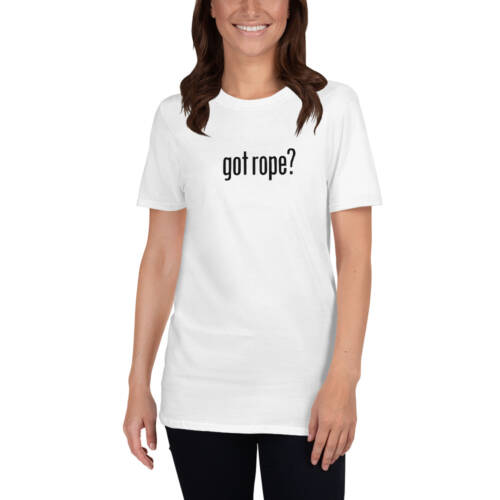
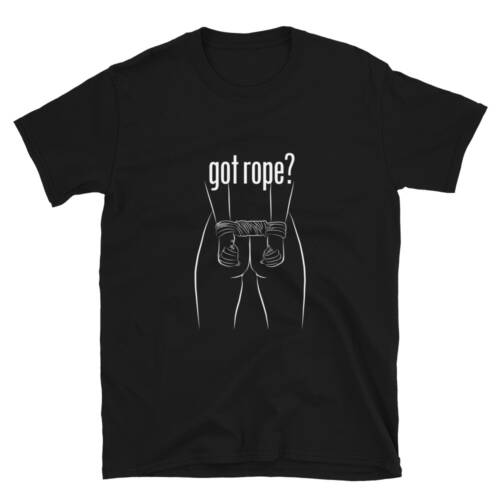
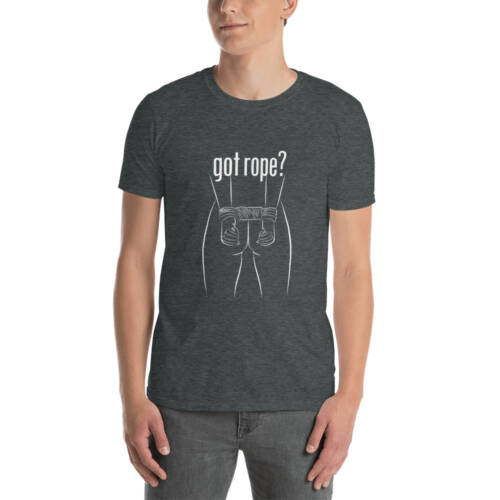
If you’ve caught the rope bug, our Got Rope? T-Shirt is the knowing wink every rigger and rope bunny will recognize. It comes in a light-colors version too. For the bottom in your life, there’s Bound.



More from the blog: What does YKINMKBYKIOK mean? · Gifts for a sub · What is a brat in BDSM?

Leave A Comment